






Tech Startup
– 8 min read
Context Engineering: Mastering GEO Techniques for the AI-Powered Search Era

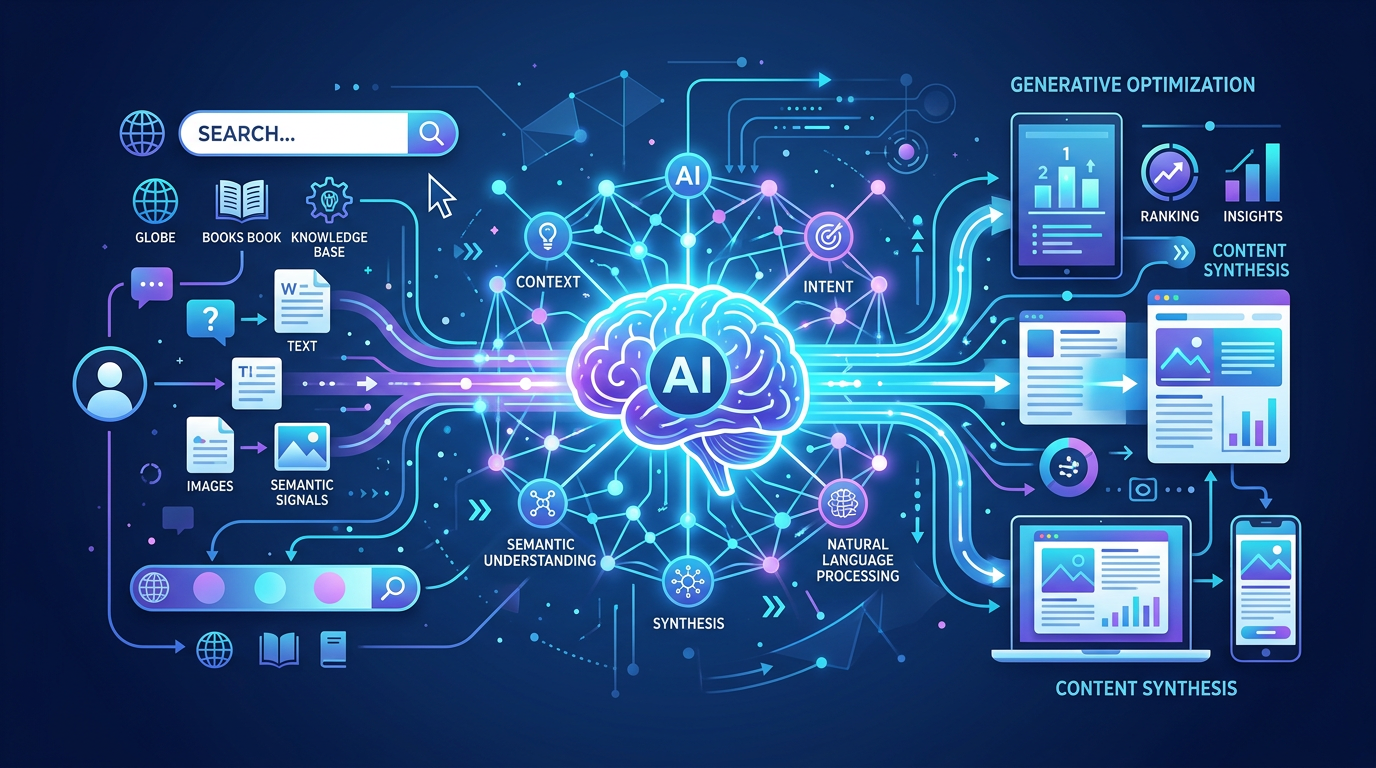
The search landscape has fundamentally changed. While traditional SEO optimized content for algorithms crawling web pages, today's reality demands something different: your content must speak to AI engines that synthesize, summarize, and generate answers on the fly.
Welcome to the era of Context Engineering powered by Generative Engine Optimization (GEO) – where the goal isn't just to rank, but to be understood, cited, and recommended by AI assistants that millions rely on daily.
What is Context Engineering?
Context engineering is the strategic practice of structuring and presenting information so that AI systems can accurately interpret, extract, and utilize it when generating responses. Unlike traditional content creation that targets human readers first, context engineering designs content for dual consumption: both human understanding and machine comprehension.
Think of it as building bridges between your expertise and AI's ability to share that expertise with the world.
Understanding Generative Engine Optimization (GEO)
Generative Engine Optimization represents the next evolution beyond SEO. While SEO focused on page rankings, GEO focuses on answer inclusion – ensuring your content appears in AI-generated responses across platforms like ChatGPT, Claude, Perplexing, Bing Chat, and Google's AI Overviews.
The stakes are high: studies show that generative AI tools now handle over 40% of search queries for certain demographics, and this number is rapidly growing. If your content isn't optimized for these engines, you're invisible to a massive and expanding audience.
Why Traditional SEO Techniques Fall Short
Traditional SEO optimized for:
- Keywords and density – stuffing precise terms for algorithm matching
- Backlinks – building authority through external validation
- Technical crawlability – ensuring bots could access and index pages
Generative engines, however, need:
- Semantic clarity – understanding concepts, not just keywords
- Factual accuracy – verifiable information that can be confidently cited
- Contextual depth – comprehensive explanations that answer follow-up questions
- Attribution-friendly formatting – clear sources and structured data
The Seven Core GEO Techniques for Context Engineering
1. Semantic Structuring
Organize content around concepts and their relationships, not just keywords. AI models excel at understanding context when information follows logical semantic patterns.
Implementation:
- Use hierarchical heading structures (H1, H2, H3) that map concept relationships
- Include topic clusters that link related concepts together
- Define terms clearly before using them in complex explanations
- Create conceptual anchors (key phrases that AI can latch onto)
Business Impact: When a prospect asks an AI assistant about solutions in your domain, semantically structured content ensures your approach is explained accurately and completely.
2. Citation-Ready Formatting
AI engines prioritize content they can cite with confidence. Make attribution easy and obvious.
Implementation:
- Include clear author credentials and publication dates
- Add structured metadata (schema markup, JSON-LD)
- Use authoritative language without hedging unnecessarily
- Provide data sources and statistics with specific citations
- Include "Last Updated" timestamps on evergreen content
Business Impact: AI tools favor citable sources, increasing your brand's visibility as an authority when users ask domain-specific questions.
3. Question-Answer Optimization
Generative engines are fundamentally answering questions. Structure content to directly address queries your audience asks.
Implementation:
- Research common questions in your industry (use forums, customer support logs, social media)
- Create FAQ sections with direct, complete answers
- Use question headings throughout content ("How does X work?" "What are the benefits of Y?")
- Provide concise summaries before detailed explanations
- Include "People Also Ask" style sections
Business Impact: Positions your content as the go-to source when AI tools answer user queries, driving qualified traffic and leads.
4. Depth with Clarity
AI models can process depth but struggle with ambiguity. Provide comprehensive information in clear, unambiguous language.
Implementation:
- Explain concepts thoroughly rather than assuming prior knowledge
- Use plain language constructions alongside technical terms
- Break complex ideas into digestible subsections
- Include examples and case studies that illustrate abstract concepts
- Avoid jargon without definition
Business Impact: Your expertise gets communicated accurately by AI intermediaries, building trust with potential customers before they ever visit your website.
5. Multi-Format Content Architecture
Different AI engines access information differently. Support various extraction methods.
Implementation:
- Complement long-form articles with bullet-point summaries
- Create comparison tables for competitive analysis
- Use numbered lists for processes and procedures
- Include infographic-style callout boxes for key statistics
- Provide both narrative and structured data versions of information
Business Impact: Maximizes visibility across different AI platforms and conversation contexts, from quick comparisons to detailed explorations.
6. Contextual Completeness
AI engines synthesize information from multiple sources. Ensure your content provides complete context that can stand alone or integrate with other sources.
Implementation:
- Address counterarguments and alternatives within your content
- Provide background context for specialized topics
- Link related concepts explicitly (not just through hyperlinks)
- Include prerequisite information in context
- Anticipate follow-up questions and address them proactively
Business Impact: Reduces the likelihood of AI tools supplementing your information with competitor content, keeping your brand's voice dominant in the answer.
7. Authority and Freshness Signals
Generative engines assess credibility through multiple signals. Build and maintain trust indicators.
Implementation:
- Regularly update cornerstone content with new data and insights
- Showcase author expertise (credentials, experience, publications)
- Include original research, data, or unique perspectives
- Reference reputable external sources where appropriate
- Maintain consistency in brand voice and factual accuracy across all content
Business Impact: Establishes your organization as a trusted authority, increasing the frequency and prominence of AI-generated mentions and recommendations.
Measuring GEO Success: New Metrics for a New Era
Traditional analytics focused on page views and rankings. GEO success requires different measurements:
- Citation Frequency: How often do AI tools reference your content?
- Answer Inclusion Rate: What percentage of relevant queries include your information?
- Source Attribution: Are you being named as a source in AI responses?
- Query Coverage: How many different query variations trigger your content inclusion?
- Contextual Accuracy: Is AI representing your information correctly?
Action Step: Set up monitoring for your brand mentions across major AI platforms. Tools are emerging to track AI search visibility, much like SEO tools tracked traditional rankings.
The Business Case for Context Engineering
Organizations investing in GEO-optimized context engineering are seeing tangible results:
Increased Qualified Traffic: Users arriving via AI recommendations are often further along in their research journey, having already received curated information that positioned you as a solution.
Thought Leadership at Scale: Your expertise reaches audiences through AI intermediaries, expanding your influence without proportional marketing spend.
Competitive Differentiation: Early adopters of GEO techniques gain visibility in AI-generated answers before competitors even understand the game has changed.
Enhanced Customer Education: AI tools pre-educate prospects using your content, reducing sales cycle friction and improving conversion rates.
Future-Proof Marketing: As AI-mediated search continues to grow, GEO-optimized content maintains visibility while traditional SEO-only approaches diminish in effectiveness.
Getting Started: Your Context Engineering Roadmap
Phase 1: Audit and Assess (Weeks 1-2)
- Identify your most important content assets
- Evaluate current content against GEO principles
- Research common queries in your domain that AI tools are answering
Phase 2: Optimize Existing Content (Weeks 3-8)
- Apply semantic structuring to cornerstone content
- Add citation-ready formatting and metadata
- Create FAQ sections addressing common queries
- Update with fresh data and authority signals
Phase 3: Create GEO-First Content (Ongoing)
- Develop new content with context engineering principles from the start
- Focus on comprehensive question-answer coverage
- Build topical authority clusters
- Maintain regular updates and freshness
Phase 4: Monitor and Refine (Ongoing)
- Track AI citation frequency and accuracy
- Gather user feedback on AI-mediated discovery
- Adjust strategies based on performance data
- Stay current with evolving AI engine capabilities
The Road Ahead
We're witnessing a fundamental shift in how information flows from creators to consumers. AI engines act as sophisticated intermediaries, synthesizing vast amounts of content into coherent, contextualized answers.
Organizations that master context engineering through GEO techniques won't just survive this transition—they'll thrive, reaching audiences in ways traditional marketing could never achieve. The question isn't whether to adapt to this new reality, but how quickly you can implement these techniques before competitors do.
The future of discoverability is context, not keywords. The future of authority is being cited by AI, not just indexed by crawlers. The future of content marketing is engineering information for machine comprehension and human value simultaneously.
Your move: Will you be cited, or will you be invisible?
Key Takeaways
✓ Context engineering designs content for AI comprehension, not just human reading
✓ GEO focuses on answer inclusion rather than traditional page rankings
✓ Seven core techniques: semantic structuring, citation-ready formatting, question-answer optimization, depth with clarity, multi-format architecture, contextual completeness, and authority signals
✓ New metrics needed: citation frequency, answer inclusion rate, source attribution
✓ Early adoption creates competitive advantages in AI-mediated discovery
✓ Implementation requires auditing existing content and creating GEO-first strategies going forward
The AI-powered search era has arrived. Context engineering with GEO techniques is your roadmap to remain visible, authoritative, and relevant in this new landscape.