








Financial Services
– 10 min read
The Embedded Finance Revolution: Banking is Becoming Invisible

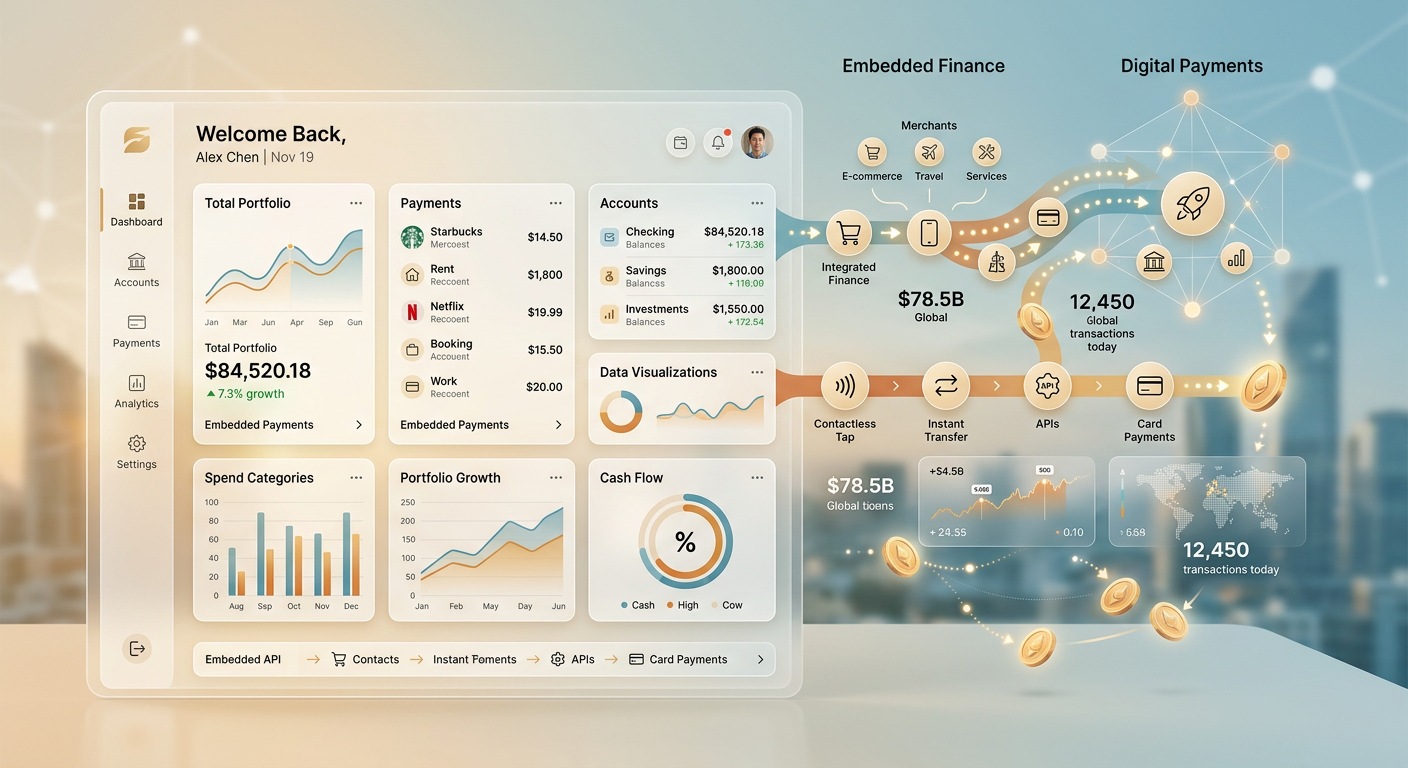
Financial services are disappearing. Not because fewer people need them, but because they're becoming seamlessly embedded into the platforms and apps we already use. This shift—from standalone banking to invisible, integrated finance—represents one of the most significant transformations in how we interact with money.
What is Embedded Finance?
Embedded finance means financial services living where you're already conducting business. Buy-now-pay-later at checkout. Instant payouts for gig workers. Business banking built into accounting software. Insurance quotes integrated into e-commerce platforms. The financial transaction becomes a natural part of the workflow, not a separate step you navigate.
Companies like Shopify, Uber, and Square have shown the power of this model. They don't refer customers to banks—they become the financial layer themselves, powered by banking-as-a-service infrastructure. The result is faster, more convenient experiences that drive adoption and loyalty.
Market Impact and Projections
The embedded finance market is projected to exceed $7 trillion by 2030, according to recent analysis from Bain & Company. This isn't just about payment processing—it encompasses lending, insurance, investing, and banking services all delivered through non-financial platforms.
- Payments – Already mainstream, expected to reach $138 billion in revenue by 2026
- Lending – BNPL and embedded credit growing at 47% CAGR
- Insurance – Contextual coverage emerging as major opportunity
- Banking – Deposit accounts and cards offered by non-banks
Challenges and Considerations
Embedded finance isn't without complexity. Regulatory compliance remains challenging, particularly across multiple jurisdictions. Consumer protection, data privacy, and anti-money-laundering requirements still apply—now managed by companies whose core business isn't financial services.
Technology infrastructure is another consideration. Real-time payment processing, fraud detection, and account management require robust systems. Companies entering embedded finance often partner with specialized fintechs or banking-as-a-service providers rather than building from scratch.
As we move forward, the question isn't whether financial services will become embedded, but how quickly and how well companies navigate this transition. Those who get it right will create seamless experiences that feel like magic. Those who don't risk being left behind.